Deep Sea Fishing in Ocean City, Maryland — What You Need to Know

Deep sea fishing offshore Ocean City Maryland pelagic species guide

By Captain Tony Battista

U.S. Coast Guard Licensed Captain • Professional Fishing Guide Since 2007 • 2,800+ Days on the Water

Click here To learn about our Charters

Keep reading to learn more about Offshore Fishing in Ocean City, MD. 

OffSHORE FISHING

Ocean City has been a deep sea fishing destination since 1939, when 171 white marlins were boated in a single day and the town earned the title “White Marlin Capital of the World.” That reputation wasn’t a marketing slogan—it was earned on the water, and it still holds today. The White Marlin Open is held every August in Ocean City. It is the largest and richest billfish tournament in the world attracting thousands of anglers. That alone should tell you something about the quality of offshore fishing here.

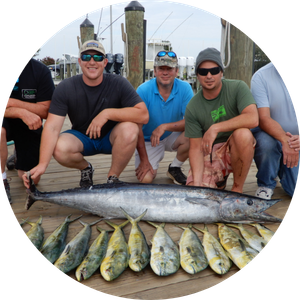
I’ve been fishing these waters for more than 50 years and have been a U.S. Coast Guard licensed captain and professional guide since 2007. I’ve logged 247 days offshore and have competed in many tournaments. Deep sea fishing is a different animal from bay fishing and nearshore trips—it’s a bigger commitment in terms of time, money, and physical ability. Trips can range from 10-14 hours, but the experience is well worth it. Blue marlin, white marlin, sailfish, wahoo, tunas (Big Eye, Bluefin, Yellowfin & longfin) and mahi are all possibilities. On some deep sea fishing trips, there could also be the possibility of  deep dropping for some tilefish.

The opportunity for a true giant exists on every trip. Here are a few of the Maryland state records. Blue Marlin 1135 pounds, White Marlin 135 pounds, Bigeye Tuna 375 pounds, Yellowfin Tuna 236.5 pounds and the Bluefin Tuna 625 pounds. Mahi is 74.5 pounds and Wahoo 131 pounds.

This page is here to give you an honest look at what deep sea fishing out of Ocean City involves. What you’ll catch, what kind of boats go out there, what it costs, and what you should know before you book. Whether you’ve never been offshore or you’ve done it a dozen times, I want to make sure you have the information you need to have a great experience and help plan the best fishing trip for you.

Why Ocean City for Deep Sea Fishing?

Geography is the biggest reason. The continental shelf off Ocean City drops off relatively close to shore compared to other areas along the North East coast.. The underwater canyons— Wilmington Canyon, Baltimore Canyon, Poor Man’s Canyon, Washington Canyon, and Norfolk Canyon—are where the warm water eddies from the Gulf Stream current push up against the shelf. These ever changing conditions attract hold bait and multiple pelagic species during our season which can span from late April to late October. Some years this can stretch into December and January. These canyons range from about 55 to 95 miles offshore. The boat ride out and back can last 2-3 hours each way.

The infrastructure here is built for it too. Ocean City has purpose-built marinas—Sunset Marina, the Ocean City Fishing Center, Bahia Marina, and Fisherman’s Marina, Talbot Street Pier and the White Marlin marina among them—with a charter fleet that ranges from world-class sportfishing yachts to smaller center consoles like the one in my operation.

When it comes to marlin fishing, Ocean City is home to some world class captains. Some of the very best in the business call this place home. The ones at the top started as local charter mates when they were young and worked their way up. Countless days and hours perfecting their trade. If catching your first billfish is your desire, seek out one of these professionals.

The same when it comes to catching tuna. There are a handful of guys that are very good at it.

Offshore vs. Nearshore vs. Bay Fishing — Choosing the Right Trip

If you’re visiting Ocean City and trying to figure out which type of fishing trip to book, here’s how I break it down for my customers:

Bay (inshore) fishing keeps you in protected, calm water. Trips run 2–4 hours, the boat rides are minimal, and it’s perfect for families, kids, first-timers, and anyone who wants a relaxed day. The fishing is legitimately good—flounder, striped bass, bluefish, and more depending on the season.

Nearshore wreck fishing takes you 3–10 miles offshore to fish structure—natural bottom, artificial reefs, and shipwrecks. It’s a real ocean experience without the long run. Great for sea bass, tautog, triggerfish, flounder, and more. Four-hour trips, back at the dock in time for lunch or dinner.

Deep sea (offshore) fishing is the full commitment. You’re going further, fishing longer, and targeting bigger species. It’s more physically demanding, more expensive, and weather-dependent. But when conditions align, there’s no fishing experience on the East Coast that compares.

If you’re not sure, give me a call or reach out. I’ll ask a few questions about your group—who’s coming, what experience they have, what they want to get out of the trip—and help you figure out the right charter. That’s not a sales pitch; it’s just part of doing this the right way.

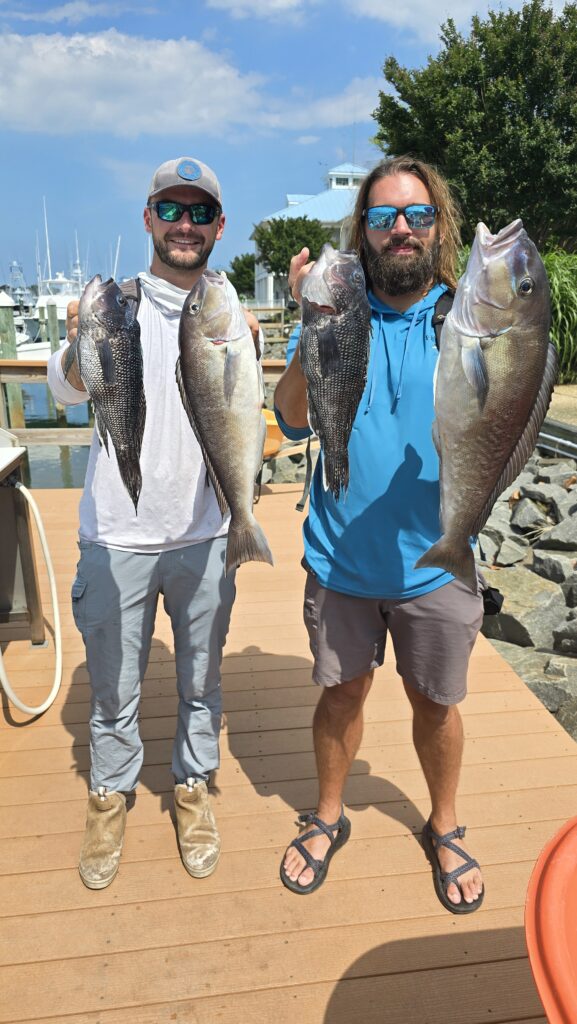
Two anglers holding black sea bass and golden tilefish at Ocean City marina after offshore wreck fishing charter
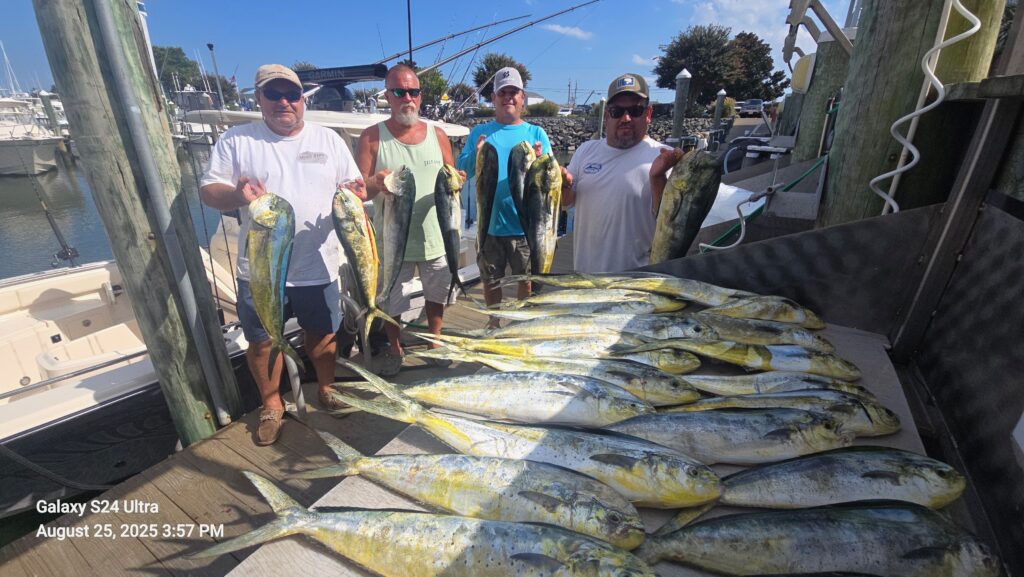
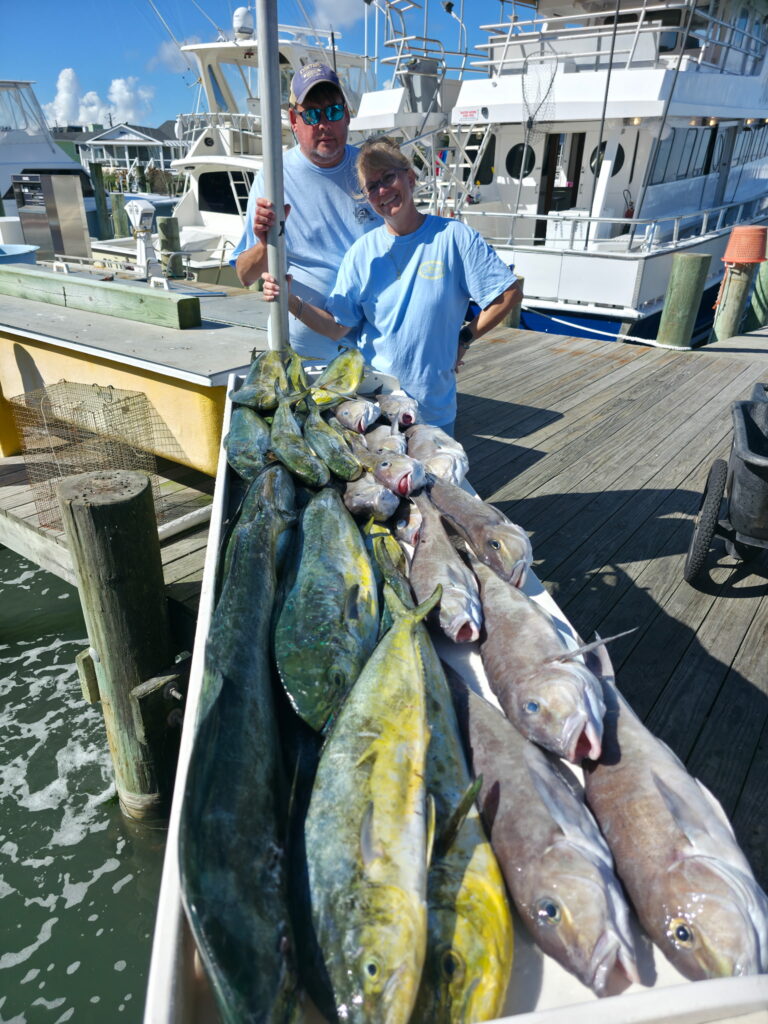
Four anglers with large mahi-mahi catch on dock after offshore fishing charter in Ocean City Maryland
Couple displaying large catch of mahi-mahi and golden tilefish on cleaning table after Ocean City Maryland offshore charter
Two anglers holding jumbo black sea bass on the dock after an offshore fishing charter with Saltwater Adventures in Ocean City MD

What Fish Will You Catch Offshore?

The species available on an offshore fishing charter out of Ocean City depend on the time of year and how far you’re willing to go. Here’s a general breakdown:

Yellowfin Tuna: One of the most popular targets. Yellowfin show up in late spring and the bite stays strong through fall. They’re excellent fighters and even better on the dinner table. You’ll typically find them around the canyon edges and temperature breaks.

Bluefin Tuna: The bluefin bite has been outstanding in recent years. Giant bluefin can push well over 500 pounds. The fall run—October and November—has produced some incredible fishing off Ocean City. These fish are highly regulated, so make sure your captain stays current on the rules.

Bigeye Tuna: A true deep-water fish. Bigeye tend to run deeper than yellowfin and are usually caught while deep dropping or overnight canyon trips, but in recent years, the trolling bite has been excellent. They’re a real prize when you connect.

White Marlin: This is what put Ocean City on the map. White marlin are mostly catch and release, and the action peaks in July and August. Watching a white marlin light up behind a spread of teasers is one of the most exciting things in fishing.

Blue Marlin: Less common than whites, but they’re out there. Blue marlin are the ultimate big-game target—these fish can exceed 1000 pounds. Summer is the window.

Mahi-Mahi (Dolphin): Mahi are incredible to catch. They’re acrobatic fighters, beautifully colored, and taste fantastic. They show up in late spring and stay through early fall. On a good day, you can find schools of them working floating debris or weed lines offshore.

Wahoo: A speed demon. Wahoo are fast, aggressive, and one of the best-eating fish in the ocean. They’re typically caught trolling at higher speeds along the canyon edges.

Tilefish: Tilefish are a deep-dropping specialty—you’re fishing in 300 to 900 feet of water. They’re one of the best-eating fish you’ve never heard of. Golden tilefish are the main target, and the fishing can be excellent when you find the right bottom.

Sharks: Mako, thresher, blue sharks, and more. Ocean City has a well-deserved reputation for shark fishing. Most shark fishing is catch and release, and the peak runs from late spring through fall. Sharks are also highly regulated.

Split or Make-Up Charters

Split or make-up charters can also be helpful if you are by yourself or only have 2 people in your group.There are a few marinas in town that offer this option for the offshore trips. It usually involves you putting your name on a waiting list. When enough people (5-6) sign up, the trip is scheduled.

I offer something similar for both nearshore and offshore. I actually have a running list of names to pull from. Every time I need 1 to 2 anglers, I send out a text and can fill trips quite quickly.

On my make-up trips, we only need 3 anglers total. This option makes it easier for small groups to get out. It is only available on nearshore wreck fishing or trolling and on offshore trips. It is not available on the 2 and 3 hour back bay trips.

What to Expect on a Deep Sea Fishing Charter

If you’ve never been on an offshore fishing charter before, here’s what a typical day looks like so you know what you’re signing up for.

Before the Trip

Your captain should be in touch a day or two before to confirm the plan, discuss weather and sea conditions, and let you know what to bring. A good captain will be straight with you—if conditions aren’t looking favorable, he’ll tell you. Even the greatest captains can’t control Mother Nature, but wasting your money on a boat ride is something they can prevent. I’d rather reschedule you to a better day than send you out on a rough one.

The Run Out

Depending on where you’re headed, the boat ride to the fishing grounds can take anywhere from 2 to 2.5 hours. On calm days, the ride is part of the experience—watching the coastline fade behind you and the water change from green to deep blue. On rough days, it can be a grind. This is why sea conditions matter and why a captain who’s honest about the forecast is worth his weight in gold. Again, this is where the bigger boats with the nice salons have an advantage. Having the option for a nice nap on the way out really helps.

Fishing

Once you’re on the grounds, the techniques depend on what you’re targeting. Trolling for billfish and tuna means the boat is in motion with lines spread behind it—you’re watching the rods and waiting for a strike. Chunking is another great way to catch tuna. Deep dropping for tilefish is completely different—you’re dropping down 300 – 900 feet. Electric reels are used when dropping in anything over 350 feet.

The Ride Home and After

After fishing, you’ll make the run back to the dock. The crew will typically start cleaning the boat and prepping during the ride. This is when chartering one of the bigger boats really pays off. If you thought a nap on the way off was nice, the one in is much needed.

Once you’re tied up, fish cleaning is available at most marinas. The cost can be by the pound or by the fish. Tips for the crew are customary in the charter industry. Mates work for tips, and the standard is 15–20% of the trip cost. You should plan for both in your budget so it doesn’t catch you off guard.

💡 Captain Tony’s Tip – Motion Sickness — Take It Seriously

I’m going to be straight with you, this is the difference between “Happy & Sad (miserable is a better word). The open ocean is different from the back bays. Even on relatively calm days, there’s swell. On rougher days, it can get really uncomfortable if your body isn’t ready for it.

Take a motion sickness medicine before you go. Don’t wait to see how you feel—by the time you feel sick, it’s too late. Think of it as trip insurance. Over the years, the brand Bonine seems to give the best overall results. It is an “over the counter” pill that doesn’t seem to make people drowsy. Please always check with your physician first.

About 90% of people are fine on a typical day, but the remaining 10% can have a miserable experience. Don’t be in that one person in the group that ruins the trip for everyone else. It’s no fun watching someone turn “green” and hang over the side all day.

If you or someone in your group has a history of severe motion sickness, an offshore trip may not be the right fit. A nearshore wreck fishing trip or a bay charter can still give you a fantastic day of fishing in much calmer water. There’s no shame in making the smart choice for your group.

What Does Deep Sea Fishing Cost in Ocean City?

I get this question all the time, so I’ll lay it out as clearly as I can. Offshore fishing is more expensive than inshore fishing—that’s just the reality. You’re burning more fuel, the trips are longer, and the equipment and boats are bigger. But there are options at different price points.

Keep in mind that many offshore charters charge fuel surcharges on top of the base rate, and mate tips (15–20%) should be factored into your budget. All of my charters include fishing licenses, equipment, bait, ice, and cold water. Most reputable charters in Ocean City do the same, but it’s always worth confirming what’s included before you book.

Offshore Charter Pricing At A Glance

Charter Type

Typical Duration

Price Range

Best For

Small Boat Private (25–35 ft)

10-12 hours

$1650- $2250

Smaller groups 3 or less.

Small Boat Per-Person (Make-up Trips)

10-12 hours

$550–$650 per person

Individuals looking to join up with others.

Sportfishing Yacht Private (40–65 ft)

12 hours

$2,800-$4800

Full groups of 6 looking for more comfort.

When Is the Best Time for Offshore Fishing in Ocean City?

The offshore season in Ocean City generally runs from late May through November, with the peak window being June through October. Here’s how the season typically breaks down:

Late May – June: The offshore season opens up as water temps rise. Yellowfin tuna, mahi, and sharks start showing. Deep-dropping for tilefish is productive year-round but really shines in the warmer months.

July – August: Peak season. This is when everything is firing. White marlin, blue marlin, yellowfin, bigeye, mahi, wahoo—the variety is incredible. The White Marlin Open runs in August and draws boats from up and down the coast. Book early if you want summer dates.

September – October: The fall bite can be outstanding. Mahi push closer, tuna fishing stays strong, and bluefin tuna start their fall run. October bluefin fishing off Ocean City has been some of the best on the East Coast in recent years.

November: The season winds down but doesn’t quit. Bluefin can still be around, and there are windows for other species depending on water temps. Weather becomes more of a factor this time of year.

What Happens If the Weather Doesn’t Cooperate?

Weather is part of fishing—it’s just the reality of being on the water. The good news is that there are options. Even on days when it’s rough out at sea, you can often still have a great day in the bays.

That said, safety always comes first. If your captain needs to cancel due to weather, most will work with you to reschedule during your stay in Ocean City. I always do my best to get my customers out on the water before they head home. It’s worth asking about your captain’s specific cancellation and rescheduling policy when you book so there are no surprises.

Fish Cleaning — What to Expect

This is one of the most common questions I get: “What do we do with the fish after we catch them?

Every boat and every marina handles it a little differently. Most marinas in Ocean City have a dedicated fish cleaning service with their own table. They’ll also have a separate table where you can clean your own fish if you prefer. Or you can take your catch home whole and clean them yourself.

As for pricing, it depends on the size and type of fish. Bigger fish like tuna are typically priced by the pound—anywhere from $0.50 to $1.00 per pound. Smaller fish are priced individually: flounder might be $3.00 to $5.00 each, sea bass and triggerfish around $1.00 to $2.00 each, and tilefish or mahi could run $2.00 to $4.00 each.

Tipping Your Captain and Crew

How much should I tip?” Honestly, this is the hardest question for any captain to answer. We always hope we don’t have to field it—ideally, you had a great time and the effort speaks for itself.

Here’s what I can tell you: a good crew works hard to make sure you have the best experience possible. The mates especially—they’re not on a payroll. They work for tips alone. The industry standard is 15–20% of the trip cost, but it’s ultimately up to you. I’ve seen everything from 5% to 30%. Just keep tipping in mind when you’re budgeting for your trip so it doesn’t catch you off guard.

When Is the Best Time to Go?

The bay fishing season in Ocean City typically runs from mid-April through November, with the peak window from May through October. Early morning and late afternoon or sunset trips tend to produce the best results, but experienced captains know how to find fish throughout the day. If you’re visiting during the summer months, book early—the best charter times fill up fast, especially on weekends.

Common Questions About Ocean City Offshore Fishing

Depending on the season and how far offshore you go, you can target yellowfin tuna, bluefin tuna, bigeye tuna, white marlin, blue marlin, mahi-mahi, wahoo, tilefish, and various shark species. The peak offshore season runs June through October, with different species available throughout that window.

It varies by trip type. Nearshore trips stay within 3–10 miles. Midrange offshore trips may run 10–20 miles. Full canyon trips to places like Baltimore Canyon, Poor Man’s Canyon, and Washington Canyon are typically 55 to 95 miles offshore. The further you go, the longer the trip and the bigger the species you’re likely to encounter.

Ocean City has a large charter fleet with boats at several major marinas, including Sunset Marina, the Ocean City Fishing Center, Bahia Marina, and Fisherman’s Marina, Talbot Street Pier and the White Marlin Marina. The best way to find a reputable captain is to check local fishing reports through Fish In OC (fishinoc.com), visit the docks, and talk to the local tackle shops. Look for captains with U.S. Coast Guard licensing, years of local experience, and strong customer reviews. Ask questions before you book—a good captain will be happy to talk with you. Check out our How To Find The Right Captain Page.

Costs vary widely depending on the boat, trip length, and how far offshore you’re going. Head boats start around $60–$150 per person for nearshore trips. Private charters on smaller boats (25–35 feet) typically run $598–$1,500+ depending on trip length. Full-day private charters on sportfishing yachts range from $2,000–$3,500+. Some operations, including Saltwater Adventures, offer per-person make-up trips ranging from $250–$650 per person that give you a small-group experience at a more accessible price.

No. All reputable charters provide rods, reels, tackle, bait, and terminal gear. Fishing licenses are included on charter boats.  You should bring food, drinks (no glass bottles), sunscreen, and appropriate clothing. The captain provides ice and cold water.

Yes, as long as you’re on a properly licensed boat with an experienced captain and crew. Charter boats are U.S. Coast Guard inspected and carry all required safety equipment. The crew will show you everything you need to know. That said, if you’ve never been on the ocean, consider starting with a nearshore wreck trip or a bay charter first to see how you handle the water before committing to a full-day offshore run.

Bay fishing trips get canceled less often than offshore trips since the back bays are protected. But if conditions aren’t safe, your captain will cancel the trip and most will work with you to reschedule during your stay. Always ask about the cancellation policy when you book..

Ready to Book Your Deep Sea Fishing Trip?

Whether you’re looking for a full-day canyon trip on a sportfishing yacht or a more accessible offshore experience on a smaller boat, Ocean City has options for every angler and every budget. The key is doing your homework, asking the right questions, and booking with a captain you trust.

Check out our Offshore Fishing Charters page to see trip options, pricing, and availability. Or give Captain Tony a call at 443-235-9696—he’ll help you figure out the right trip for your group.

Check out our offshore Charters

Captain Tony

Getting Ready For The Day

About the Author

Captain Tony Battista has been fishing the waters in and around Ocean City, Maryland for more than 50 years. A U.S. Coast Guard licensed captain and professional guide since 2007, Tony has logged over 2,800 days on the water across inshore, nearshore, and offshore fisheries. He’s also run charters out of Hatteras, NC and Virginia Beach, VA. In addition to running Saltwater Adventures, Tony is passionate about teaching the next generation of anglers—from first-timers to experienced fishermen looking to sharpen their skills.

Learn more about Captain Tony and the Kashmir on our About Us page