Nearshore Wreck Fishing in Ocean City, Maryland — Your Complete Guide

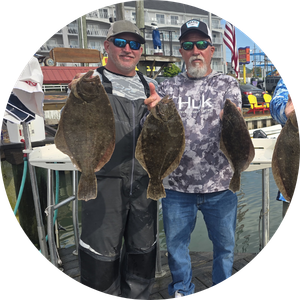
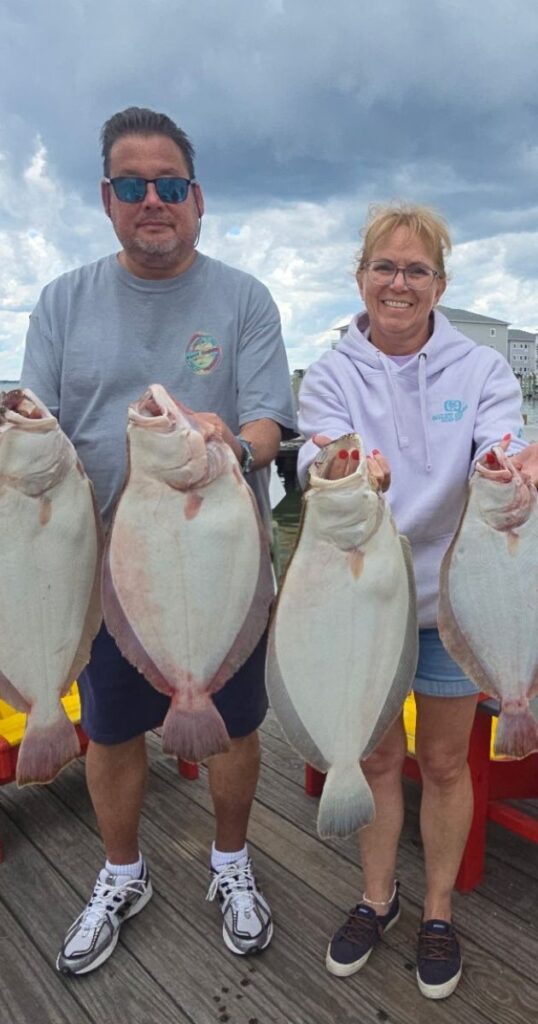
Two Anglers holding their flounder caught in Ocean City MD

By Captain Tony Battista

U.S. Coast Guard Licensed Captain • Professional Fishing Guide Since 2007 • 2,800+ Days on the Water

Click here To learn about our Charters

Keep reading to learn more about Nearshore Fishing in Ocean City, MD. 

Nearshore FISHING

If you’ve never nearshore fished the wrecks and artificial reefs off Ocean City and Assateague Island, you’re missing out on some of the best bottom fishing along the mid-Atlantic coast. Not far from our beaches lies some incredible fish habitat. Both natural and manmade, these areas provide structure for all types of marine life to live and thrive.

Flounder, sea bass, tautog, triggerfish, porgy, spadefish, trout, croaker, cobia and even lobster call these nearshore fishing spots home.

I’ve been fishing these nearshore waters for almost 31 years now. I have been a USCG licensed captain and professional fishing guide since 2007. I’ve logged over 1900 days on the water between Ocean City, Hatteras, and Virginia Beach during this time.

Nearshore wreck fishing is one of my favorite things to do. It gives people the chance to fish out on the ocean while still having land in sight. Nearshore fishing spots range from about 1 mile out to 10 and offer a much shorter ride (30-45 minutes) compared to an offshore canyon trip (2-3 hours).Most nearshore charters run 4 hours. Longer trips are available upon request especially in the Fall. Most of my trips in September and October are 8-10 hours. The weather windows become shorter and shorter, so we try to make the most of a calm day when it happens.

This guide will walk you through everything you need to know—what’s down there, what you’ll catch, how the fishing works, what it costs, and how to pick the right trip for your group.

What’s Under the Water — And How It Got There

To understand why the nearshore fishing off Ocean City is so good, you need to understand what’s on the bottom. If you could drain the ocean, you would see all it has to offer. Think of all these structures as little cities for marine life.

Natural Bottom

The natural bottom or sea floor is what “God” put there and isn’t just flat and sandy. There are areas of corals, rocks, and shell beds that have been here for thousands of years. There are ridges and valleys created by currents and waves. This is our natural bottom. Everything else down there is manmade. All this manmade material ended up down there in one of four ways.

“Mother Nature, Negligence, Back Luck or on Purpose”. On purpose it is considered an “Artificial Reef”.

The Shipwrecks

Ships that go down in bad weather and storms (Mother Nature). Ships that go down due to a collision with another vessel or a shoal (Negligence). Ships that go down due to hitting an underwater object or being hit by a “German” torpedo (Bad Luck).

Some of the wrecks out here have been on the bottom for over a century. They went down in violent storms, in collisions during fog and at night, and some were even sunk by German U-boats during World War II. These old wrecks have become permanent fish habitat over the decades, with marine growth covering the structure and attracting baitfish, which in turn attracts the species we target.


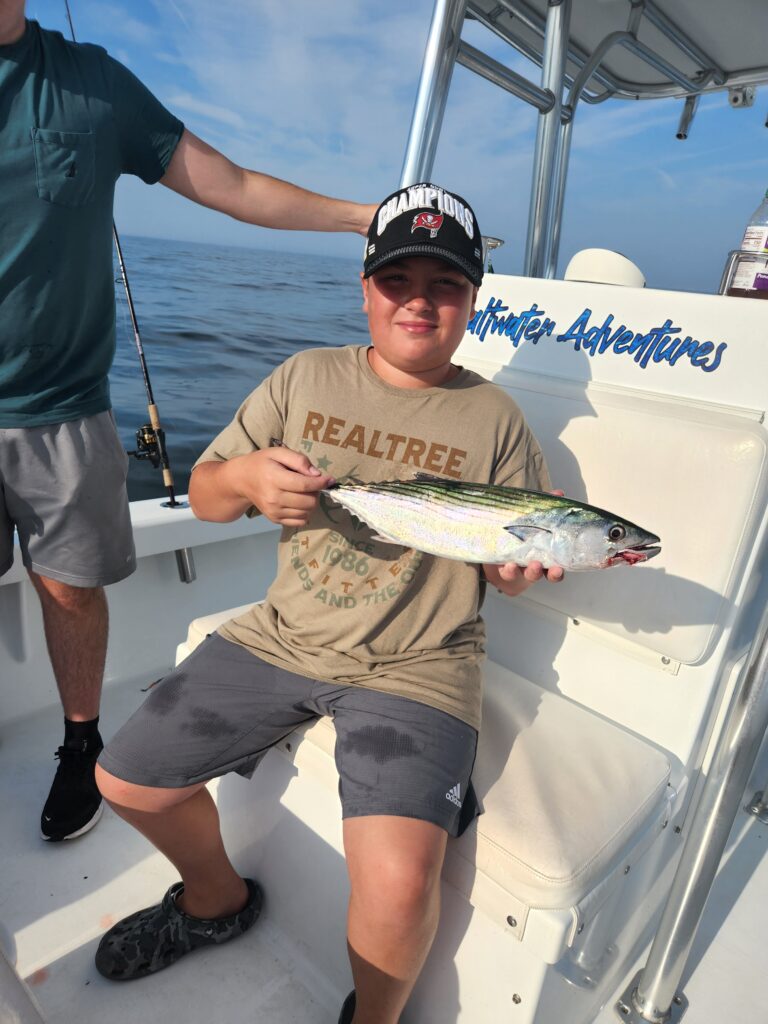
Young angler with false albacore caught nearshore fishing Ocean City on Saltwater Adventures

How the Surf Clam Industry Changed the Sea Floor

Here’s something most people don’t know. In the mid 1930s, Howard Johnson’s added the fried clam strip to their menu. It was invented by Mr. Thomas Soffron of the “Soffron Brothers Clam Company in Massachusett in 1932.

As the fried clam strip grew in popularity across the country, so did the demand for surf clams. Don’t forget about New England and Manhattan clam chowders, which were already popular. By the late 1950s, the commercial surf clam industry was in full swing.

The problem was how they harvested them. Using big hydraulic steel dredges, they destroyed upwards of 500 square miles of sea floor from North Carolina to Massachusetts. The dredging wiped out natural bottom habitat that had taken centuries to develop. Overharvesting continued into the mid-1980s, and the impact on the ecosystem was significant. A lot of the productive natural bottom that once held fish was destroyed.

That’s part of what makes an artificial reef program so important. It’s not just about creating new fishing spots—it’s about restoring habitat that was lost.


Successful flounder limit from nearshore fishing trip Ocean City Maryland charter
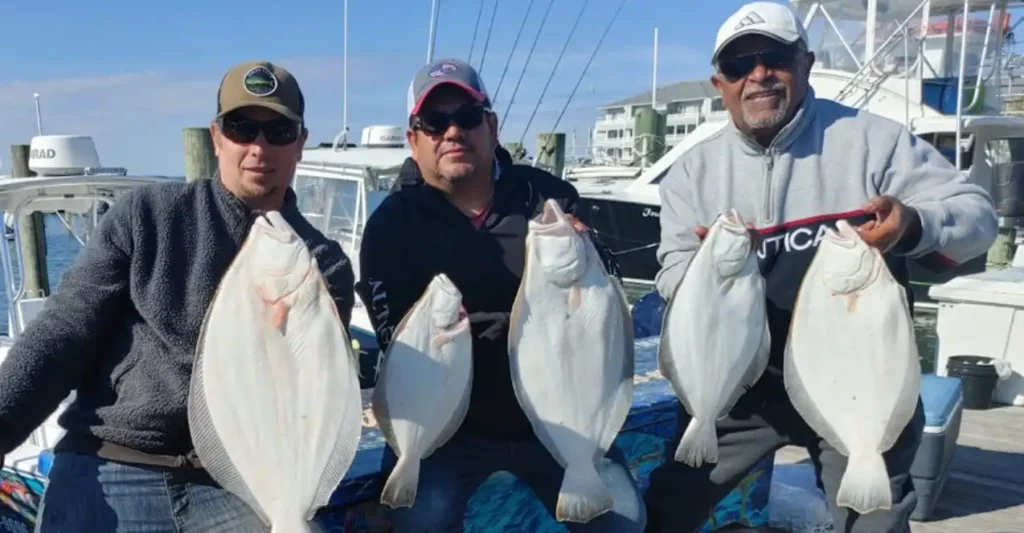
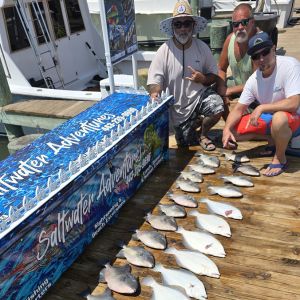
Three anglers with flounder limit displayed on dock behind Saltwater Adventures branded fish box at Ocean City Maryland marina after bay fishing charter

The Ocean City Reef Foundation

Founded in 1997, by a group of locals, the foundation took over a program that was previously run by the State of Maryland. It was terminated the year before due to a lack of funding. The Town of Ocean City agreed to take over the permits as long as it was funded privately through donations with no city funds used. The foundation is a nonprofit organization that has worked tirelessly for 28-plus years restoring and creating new habitat off our coast. Their ongoing work ensures that generations to come will have the chance to enjoy this fishing. You can learn more at ocreefs.org.

Over the years, the foundation has sunk retired military equipment and USCG vessels, old barges, tugboats, retired undersea international phone cables, and tons of concrete material. Every piece of structure that goes in the water starts attracting marine life almost immediately, and within a few years it becomes a productive nearshore fishing spot.

This is personal for me. My friend Joe Hall and I created the very first fundraiser for the foundation in the late ’90s—the OCRF Spaghetti Dinner. A friend of mine, Russell Sindler, had passed away, and I wanted to do something special in his memory. “He was a special friend that shared a lot of his fishing knowledge with me. He was also the person who introduced me to wreck fishing.

Our first “dinner” was held at “Hall’s restaurant” on 59th street in OC. It was very successful and I believe we raised close to $10K that night. Shortly after that, “Russell’s Reef” came to be. 

It is located about 5 miles southeast of the inlet and offers some great fishing opportunities. It is one of my favorite places to target Triggerfish. I have also pulled some very nice cobia off of it through the years. If you fish with me during the summer months, there is a very strong chance you will spend some time on top of “Russell’s”.

After that first dinner, Joe and I were asked to be on the “OCRF Board of Directors”. It was an honor to take part in something so helpful and needed. Ensuring that there would be plenty of fish habitat and fish for generations to come.

After all these years, the reef dinner is still going strong and the foundation has grown tremendously. It is amazing what has been accomplished.

Family of four with flounder displayed behind Saltwater Adventures branded fish box at Ocean City Maryland marina
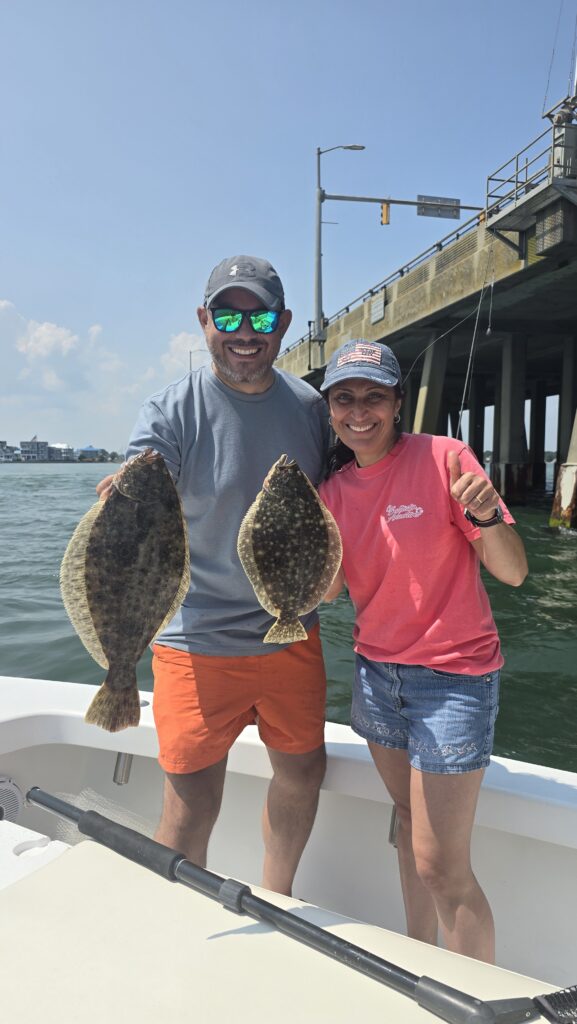
Couple holding flounder with Route 50 bridge in background during Ocean City Maryland fishing charter
Flounder and sea bass catch displayed after a nearshore wreck fishing charter in Ocean City, MD

What Fish Will You Catch?

The species you’ll target on a nearshore fishing trips depend on the time of year, but the variety is one of the best things about this type of fishing. Here’s what to expect throughout the season:

Flounder (Fluke): One of the most popular targets. Flounder hold around the structure and in the sand near wrecks. The bite picks up in late spring and stays strong through fall. They’re excellent eating and a blast to catch on light tackle.

Sea Bass (Black Sea Bass): A wreck fishing staple. Sea bass stack up on structure and are aggressive biters—they’re one of the most reliable catches on nearshore trips. The season typically opens mid-May, and the fishing can be outstanding through December. Great eating fish.

Tautog (Blackfish): A structure-oriented fish that loves wrecks, bridge pilings, and rocky bottom. Tautog are tough fighters for their size and are considered one of the best-eating fish in the ocean. The fall tautog bite is especially good.

Triggerfish (Gray Triggerfish): Triggerfish have become increasingly popular targets off Ocean City. They’re plentiful around the wrecks and reefs, put up a surprisingly good fight, and taste fantastic. In fact, an Ocean City angler held the Maryland state record for gray triggerfish—a 5.6-pound fish caught 16 miles offshore.

Porgy (Scup): Porgy are abundant around structure and make excellent table fare. They’re a reliable catch on most wreck trips and are perfect for anglers who want nonstop action.

Spadefish: A summer visitor that can show up in big schools around the structure. Spadefish are fun to catch and are underrated as a food fish.

Cobia: Not a guaranteed catch, but cobia do cruise through the nearshore waters during the warm months. When you hook one, you’ll know it—they’re powerful fighters.

Bluefish, Trout, and Croaker: All show up seasonally around nearshore structure and can add variety to your catch on any given day.

Bottom Fishing vs. Nearshore Trolling — Two Different Experiences

Most nearshore charters in Ocean City offer two distinct types of fishing, and it’s worth understanding the difference so you book the right trip.

.

Bottom Fishing (Wreck Fishing)

This is what most people think of when they hear “wreck fishing.” The boat anchors up, drifts over, or uses a trolling motor to hold position over a piece of structure—a wreck, an artificial reef, a natural bottom formation—and you drop your bait straight down to the fish.

The most common rig is what we call a “chicken rig”—two hooks and a sinker on the bottom. The hooks get baited with squid, clams, or Gulp, and you just drop it to the bottom and wait for a bite. It’s simple enough for complete beginners. You feel the tap, set the hook, and reel up. Jigging is another option for more experienced anglers—it takes a little more skill to master, but it can target bigger fish. Tony will show you either technique depending on your experience level.

Bottom fishing targets the species that spend most of their time in the lower water column—flounder, sea bass, tautog, triggerfish, porgy, and tautog all fall into this category.

Best for: All experience levels, families, anglers who want a more relaxed pace, anyone who wants great eating fish

Anglers with flounder catch from Ocean City nearshore fishing charter at Bahia Marina

Nearshore Trolling

Trolling is a completely different technique. Instead of sitting over the structure, the boat is in motion. Four rods get deployed in rod holders with lines dragging behind the boat, and the captain drives in and around underwater hills, ridges, and wreck edges. Mostly artificial lures are used for nearshore trolling.

When trolling, you’re targeting species that spend their time in the upper water column—Spanish mackerel, king mackerel, bluefish, and cobia. One of the great things about trolling is you can cover a lot more ground than bottom fishing. And when all four rods get hit at the same time, it gets pretty chaotic in the best possible way.

Some people simply prefer being on a boat that’s always moving. If sitting in one spot isn’t your style, trolling might be a better fit.

Best for: Anglers who like action and movement, people targeting mackerel, bluefish and even cobia. Anyone who prefers a boat in motion.


Private Charter vs. Head Boat for Nearshore Fishing in Ocean City, MD

In Ocean City, you have two main options for getting on the nearshore fishing trips: a private charter or a head boat (party boat). Both will put you on fish, but the experiences are very different.

Private Charters

On a private charter, you hire the entire boat for your group. The captain tailors the trip to what you want—the species, the techniques, the pace. If the kids are getting tired, you can head in early. If the fishing is hot and you want to try a different spot, the captain moves. Most private nearshore charters in Ocean City are “6-pack” boats, meaning they carry up to 6 passengers, though smaller boats like mine max out at 4 to keep things comfortable. There are also a handful of larger boats certified to carry up to 16 on a private charter.

On average, private nearshore charters run about $150 per hour for a 6-pack boat. A 4-hour trip will typically cost between $598 and $750 for the boat. That covers captain, mate, equipment, bait, licenses, ice, and cold water.

Head Boats (Party Boats)

Head boats charge per person and take larger groups—anywhere from 25 to 75 passengers depending on the boat. Here in Ocean City, we have several head boats that specialize in nearshore wreck fishing, and they range in length from about 50 to 78 feet. Trips run from 4 to 8 hours, with some offering specialty trips up to 12 hours. Prices typically range from $65 to $175 per person depending on trip length.

The upside of a head boat is cost—it’s the most affordable way to get on the ocean. The trade-off is less individual attention, less flexibility on where you fish, and more people on the rail. There’s usually a fee for rod rental on head boats, though you’re welcome to bring your own gear. Bait, ice, and licenses are included.

If you’re a solo angler, traveling with a small group, or just want to try nearshore fishing without committing to a full private charter, a head boat is a solid option. If you want a more personal, tailored experience with room to move around and a captain who’s focused entirely on your group, go private.


💡 Captain Tony’s Tip: Motion Sickness — What to Know

Nearshore trips are easier on the body than full offshore runs, but you’re still on the ocean. Even on light-wind days, there can be small swells. About 90% of people handle it just fine, but if you’ve never been out on the ocean before, take motion sickness medicine as trip insurance. Over the years, I’ve seen the best results with Bonine. It is an over the counter pill. Some take one pill the night before and some take it a few hours before the trip. Some customers have told me they take one the night before and one in the morning before the trip. Please consult your physician before taking any medicine. There seems to be very little side effects with the Bonine.

If you or someone in your group has a serious history of motion sickness, a bay fishing charter might be a better call. The back bays are protected water with minimal wave action, and the fishing is excellent. There’s no shame in making the right choice for your group—better to have a great day in the bay than a miserable one in the ocean.

What Does Nearshore Fishing Cost in Ocean City?

Keep in mind that tips for the crew are customary—the industry standard is 15–20% of the trip cost. Mates on most boats work for tips, so plan for it in your budget. Fish cleaning is available at most marinas, typically $1–$5 per fish depending on species and size. On some smaller boats, the mate or captain may handle cleaning for tips if there’s time between trips.

Nearshore Charter Pricing At A Glance

Charter Type

Duration

Price Range

Best For

Head Boat (Per Person)

4–8 hours

$65–$175 per person

Budget-friendly, solo anglers, trying ocean fishing

Private Charter (6-Pack Boat)

4–8 hours

$598–$1,200+

Groups, families, tailored experience

Private Charter (Larger Boat, up to 16)

4–8 hours

Varies by boat

Large groups, corporate outings

Per-Person Make-Up Trips (Small Boat)

5–8 hours

$250–$375 per person

Serious anglers, small-group experience

When Is the Best Time for Nearshore Wreck Fishing?

The nearshore wreck fishing season in Ocean City runs from roughly May through December, with different species peaking at different times:

May – June: Sea bass season opens (typically mid-May). The water is warming and the fishing improves every week.

July – August: Peak season for variety. Flounder, sea bass, triggerfish, spadefish, and cobia are all possibilities. This is when nearshore trips are at their most productive—and their most popular. Book early.

September – October: The fall bite can be outstanding. It is the start of some great flounder fishing. Sea bass fishing stays strong, tautog start picking up, and the tourist crowds thin out. Some of the best wreck fishing days of the year happen in fall.

November – December: Sea bass  and flounder continue to be solid. (check current regulations for exact dates). Tautog fishing starts to heat up as water temps fall. Weather becomes more of a factor, but the fish that are there are hungry. I do not target the “tog” in January, February and March, but this is when the big ones are caught. If you are interested in this cold weather fishing, Ocean City has some top notch captains that can put you on them. I would be happy to refer you to some of them.

Nearshore trolling follows a slightly different calendar. Spanish mackerel, king mackerel, and bluefish are warm-water species, so the trolling bite is generally best from June through September. As the water temps start to fall, the striped bass migration will begin from up North. It can be “hit or miss” from year to year, but when it’s good, it’s hard to beat. The striped bass can only be targeted within 3 miles of the beach or coastline.

The Nearshore Hook & Cook

One of the most popular things I offer is the Nearshore Hook & Cook. It’s exactly what it sounds like—you catch the fish, we bring it back to the marina, clean it, and have a local restaurant prepare it for you the same day. Whether you want it for lunch or dinner, it will be the freshest fish you’ve ever eaten.

I work with a couple of different restaurants that do this, and the price for preparation is very reasonable for what you get. Think of it this way: you’re eating a fish that was swimming in the ocean a few hours ago. That’s a meal you’re going to remember. It’s the best lunch deal in town, and it’s a perfect way to cap off a good day on the water.

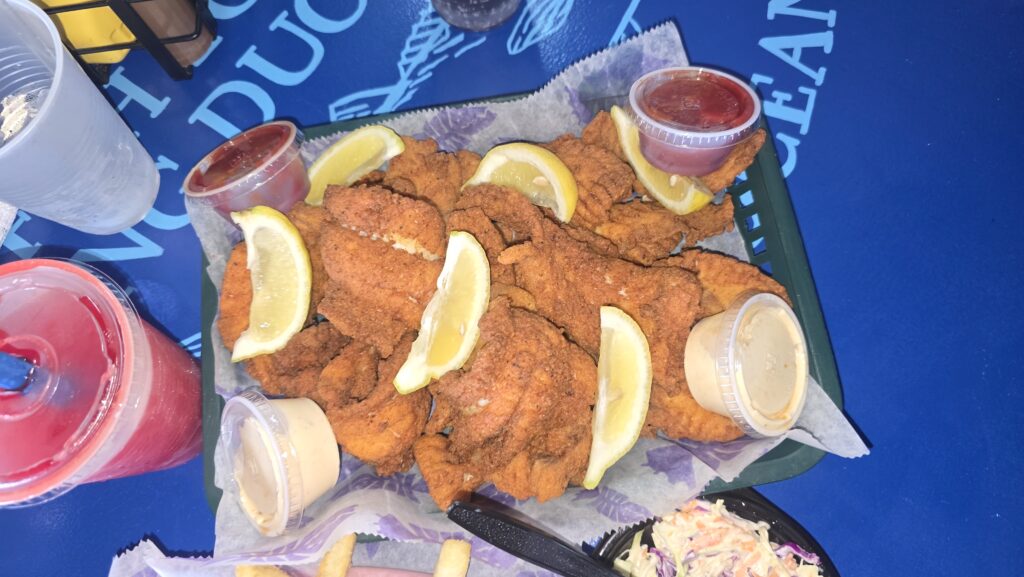
Fresh caught flounder prepared at local restaurant Ocean City Hook and Cook charter

What Happens If the Weather Doesn’t Cooperate?

Weather is part of fishing—it’s just the reality of being on the water. The good news about bay fishing is that the back bays are much more protected than the open ocean, so trips get canceled far less often than offshore charters. Even on days when it’s rough out at sea, you can often still have a great day in the bays.

That said, safety always comes first. If your captain needs to cancel due to weather, most will work with you to reschedule during your stay in Ocean City. I always do my best to get my customers out on the water before they head home. It’s worth asking about your captain’s specific cancellation and rescheduling policy when you book so there are no surprises.

Fish Cleaning — What to Expect

This is one of the most common questions I get: “What do we do with the fish after we catch them?

Every boat and every marina handles it a little differently. Most marinas in Ocean City have a dedicated fish cleaning service with their own table. They’ll also have a separate table where you can clean your own fish if you prefer. Or you can take your catch home whole and clean them yourself.

As for pricing, it depends on the size and type of fish. Bigger fish like tuna are typically priced by the pound—anywhere from $0.50 to $1.00 per pound. Smaller fish are priced individually: flounder might be $3.00 to $5.00 each, sea bass and triggerfish around $1.00 to $2.00 each, and tilefish or mahi could run $2.00 to $4.00 each.

On shorter inshore trips, your fish cleaning bill is rarely going to top $60. On some of the smaller boats, the mate or captain may handle it for tips—usually $20 to $30—if there’s time between trips. I always try to accommodate my customers the best I can on that front.

Tipping Your Captain and Crew

How much should I tip?” Honestly, this is the hardest question for any captain to answer. We always hope we don’t have to field it—ideally, you had a great time and the effort speaks for itself.

Here’s what I can tell you: a good crew works hard to make sure you have the best experience possible. The mates especially—they’re not on a payroll. They work for tips alone. The industry standard is 15–20% of the trip cost, but it’s ultimately up to you. I’ve seen everything from 5% to 30%. Just keep tipping in mind when you’re budgeting for your trip so it doesn’t catch you off guard.

When Is the Best Time to Go?

The bay fishing season in Ocean City typically runs from mid-April through November, with the peak window from May through October. Early morning and late afternoon or sunset trips tend to produce the best results, but experienced captains know how to find fish throughout the day. If you’re visiting during the summer months, book early—the best charter times fill up fast, especially on weekends.

Common Questions About Ocean City Nearshore Fishing

Depending on the season, you can target flounder, black sea bass, tautog, triggerfish, porgy, spadefish, bluefish, trout, croaker, and cobia. The variety is one of the best things about nearshore fishing—most trips produce multiple species. On trolling trips, you’ll target Spanish mackerel, king mackerel, bluefish, and cobia.

A Hook & Cook is a wreck fishing trip where you catch the fish, the captain cleans it at the marina, and a local restaurant prepares it for your lunch or dinner the same day. It’s the freshest seafood meal you’ll ever have. Captain Tony works with a couple of restaurants in Ocean City that offer this service at very reasonable prices.

Nearshore wreck fishing means fishing over underwater structure—shipwrecks, artificial reefs, and natural bottom formations—in the waters 1 to 10 miles off the coast. It’s ocean fishing, but you’re staying close enough to shore that the boat ride is short (30-45 minutes) and conditions are more manageable than deep-sea trips. You’ll typically target bottom-dwelling species like sea bass, flounder, tautog, and triggerfish.y.

On private charters, everything is provided—rods, reels, tackle, bait, the works. You’re welcome to bring your own gear if you have it, but you certainly don’t need to. On head boats, basic gear is usually available to rent for about $5.

No. Your fishing license is included in the cost of the charter on both private boats and head boats. One less thing to worry about.

Yes. Bottom fishing with a chicken rig is one of the simplest fishing techniques there is—you drop your baited hooks to the bottom and wait for a bite. A good captain will show you everything you need to know. If you’re completely new to ocean fishing, a nearshore wreck trip is a great way to experience it without committing to a full offshore day.

A private charter is exclusively for your group—your captain customizes the trip for you. A head boat is a larger vessel where you buy individual tickets and fish alongside other groups. Private charters cost more but offer a much more personalized experience.

Nearshore fishing stays within about 3–10 miles of shore and targets bottom-dwelling species around structure. Trips are shorter (4–8 hours) and conditions are calmer. Offshore (deep sea) fishing goes much further—50 to 100+ miles—and targets large pelagic species like tuna, marlin, and mahi. Offshore trips are longer (8–14 hours), more expensive, and more physically demanding.

Sunscreen, sunglasses, a hat, and any snacks or drinks you’d like. Wear shoes that can get wet—no flip-flops. Most captains provide water and ice, but check when you book. And don’t forget the camera.

Head boats (party boats) range from about $65–$175 per person depending on trip length. Private charters on 6-pack boats typically run $598–$1,200+ for a 4–8-hour trip covering your full group. Some operations also offer per-person make-up trips in the $250–$375 range for a small-group experience at a more accessible price point.

If you’ve never been on the ocean before, yes. Take Bonine the night before and again an hour before the trip. About 90% of people are fine on a typical nearshore day, but it’s not worth the risk of ruining your trip. If you have severe motion sickness, consider a bay fishing charter instead—calmer water, same great fishing.

Bay fishing trips get canceled less often than offshore trips since the back bays are protected. But if conditions aren’t safe, your captain will cancel the trip and most will work with you to reschedule during your stay. Always ask about the cancellation policy when you book..

Ready to Book You Nearshore Fishing Trip?

Whether you’re looking for a half-day wreck trip, a trolling adventure, or the full Hook & Cook experience, nearshore fishing is one of the best things you can do in Ocean City. The variety is incredible, the fishing is accessible to all skill levels, and you’re back at the dock with plenty of day left to enjoy.

Check out our Nearshore Wreck Fishing Charters page to see trip options, pricing, and availability. Or give Captain Tony a call at 443-235-9696—he’ll help you pick the perfect trip for your group

Check out our nearshore Charters